Want to send across rewards and incentives in just a few clicks?
Join Plum to drive behaviors that power business results, with rewards and incentives made simple. Choose from the widest global catalogue of 20,000+ gift cards, perks, experiences, merchandise and benefits. Submit a request to see our platform in action right away!
The Anatomy of an Ideal Reward Point System for Customers
To gain the loyalty of your customers, you may feel rewarding is your way out. However, if you start your reward point system with this notion, you are probably beginning on the wrong note.
So, how do you retain customers? How do you gain their loyalty?
To gain the loyalty of your customers, you may feel rewarding is your way out. However, if you start your reward point system with this notion, you are probably beginning on the wrong note.
And, the first obvious idea that strikes your mind is finding, studying, and replicating one of the successful reward point systems. But that might not work either.
So many companies would not have failed miserably to gain loyalty with such systems if it were so easy to design reward point systems for customers.
We can tell you step-by-step how to build a successful reward point system for customers, but that won’t help you either.
What you need to learn is how to create a long-term relationship with your customers.
Are You in a Relationship with Your Favorite Brands?
Are there certain brands that you keep re-purchasing from quite often? And you have been doing it for years? You even tell your friends also about this brand.
We are sure you can recollect a few of those.
Frequently repurchasing and not falling for alternatives means you are in a loyal relationship with those brands. And in this relationship, the benefits are mutual. You love their products/services. You are happy with the way the brand treats you. In fact, it has become a habit for you to buy from these brands. And the brand is benefitting from your repeat purchases.
To give you an example: It’s been 1.5 years that I have entered into a relationship with Amazon fresh. It has become a habit for me to order groceries from it every 3-4 days. Here is why I am loyal to Amazon:
“FREE” delivery on orders above $60. Our average grocery bill is around $70 - a win-win
Ease of ordering - past purchases section, recommendations, clean and intuitive interface, etc.
Time to time offers in collaboration with various banks
Refunds without question, if an ordered item doesn’t meet the expectation
Express delivery, excellent packaging, fresh groceries, wide variety for selection, etc.
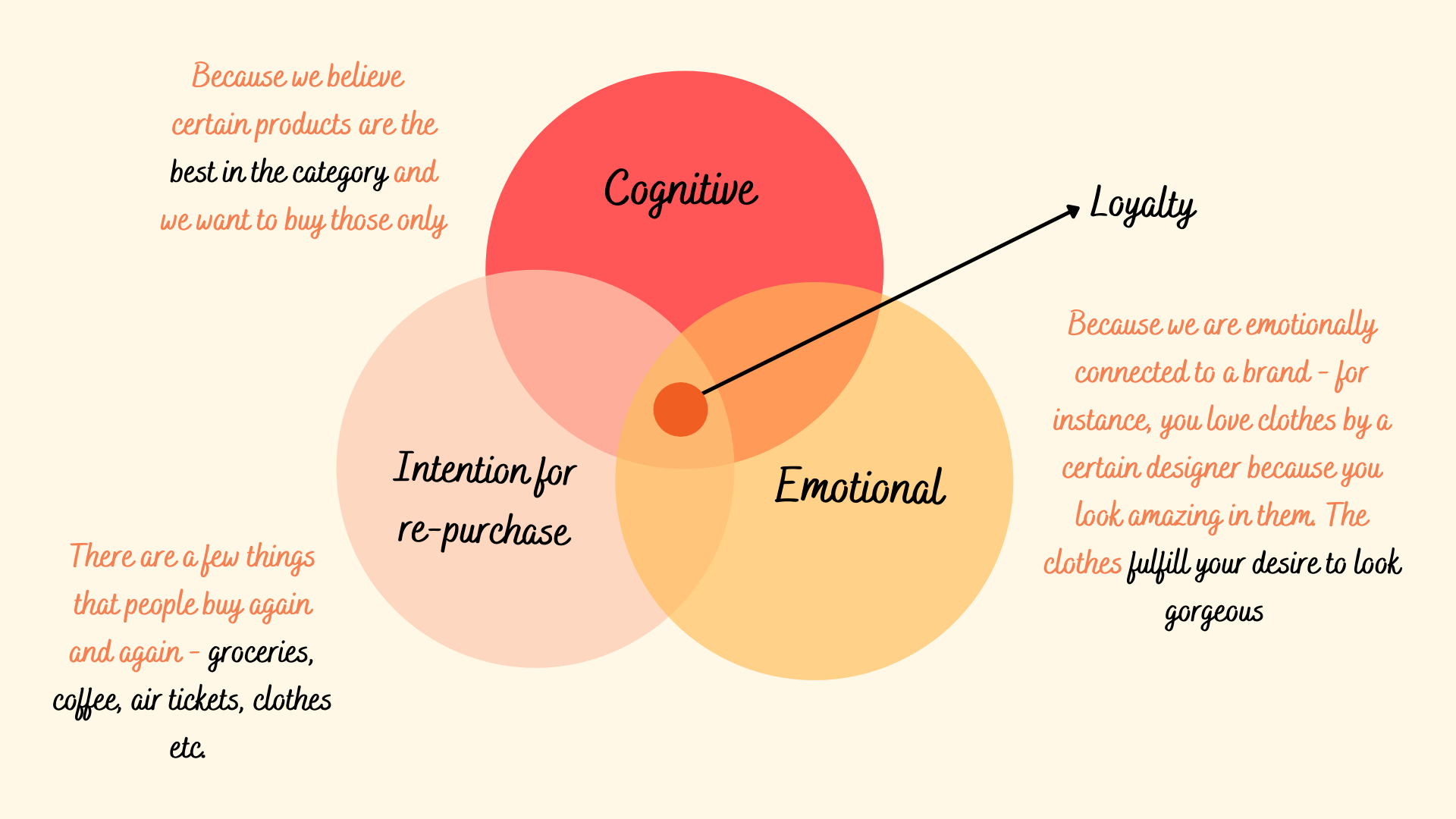
A strong relationship with customers demands excellent product/service with time-to-time rewards. Three conditions determine a strong relationship:
Cognitive - The consumer can prove that the chosen brand is superior to its competitors
Emotional - The customer must prefer the brand to others
The customer must have an Intention to purchase again
If your product/service meets these three conditions - a carefully crafted reward point system can act as a catalyst in retaining customers for a longer time. To devise a strategic reward point system for customers, let’s make the best use of human psychology.
The Psychological Mechanics of a Reward Point System
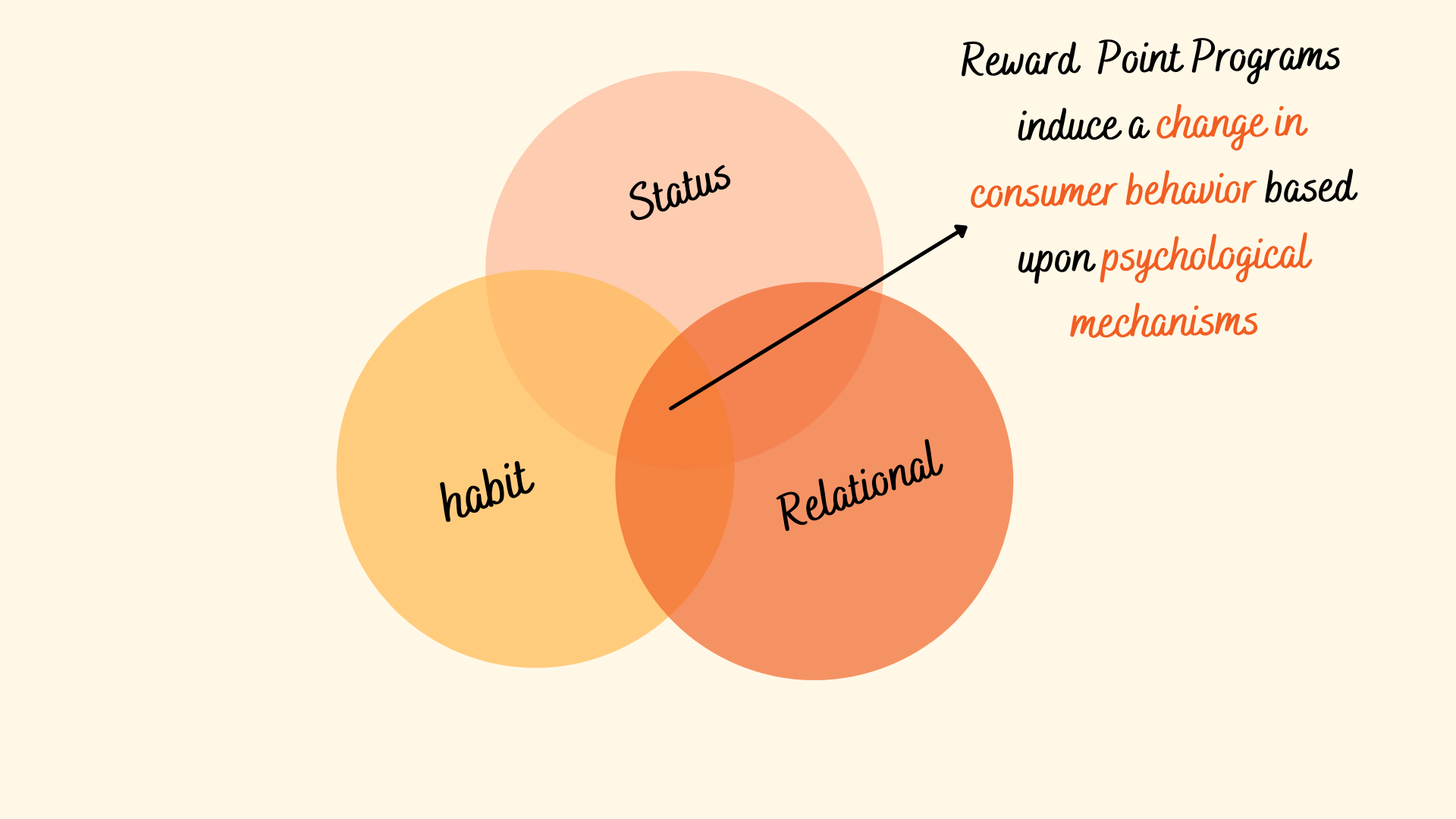
Status
In general, incentives that lift the status attract humans and the opportunity to elevate their status. Conferring an elevated status to customers may thus motivate them to behave loyally. For instance, while being at the airport, ever observed passengers in the priority queue? Aah! Their expressions tell how much they enjoy that priority treatment.
Habit
If your product/service and attractive rewards keep bringing customers back to you, they develop a habit of buying from you. And, habit creation should be our ultimate goal here. For instance, PayTM made QR code scanning a habit in India. Paytm has pioneered QR based mobile payments in India, democratizing the payments sector by enabling merchants to accept digital payments at zero cost. I personally love a lot of things about PayTM. Most prominently the intuitive user interface and user experience. Last week, my 60 years old mother-in-law booked a flight ticket using PayTM. She was uber happy. And a cash back of 1000 INR made her even happier.
Relational
Factors that play a key role in initiating a solid relationship include:
benevolent motives,
discretionary rewards,
communal qualities signaled by the firm.
The impact of the relationship is even stronger when consumers develop a relationship when the program rules seem fair. For instance, CaratLane has managed to create relationships with its customers (urban), just the way people used to have with their family (trusted) jewellery shops. Certified jewellery, exclusive designs, time-to-time offers and benefits for customers, thoughtful packaging, secure payments, etc are a few things that have contributed to the giant’s huge success.
The Mechanics of a Reward Point System for Customers
Customer reward programs should be:
Structured
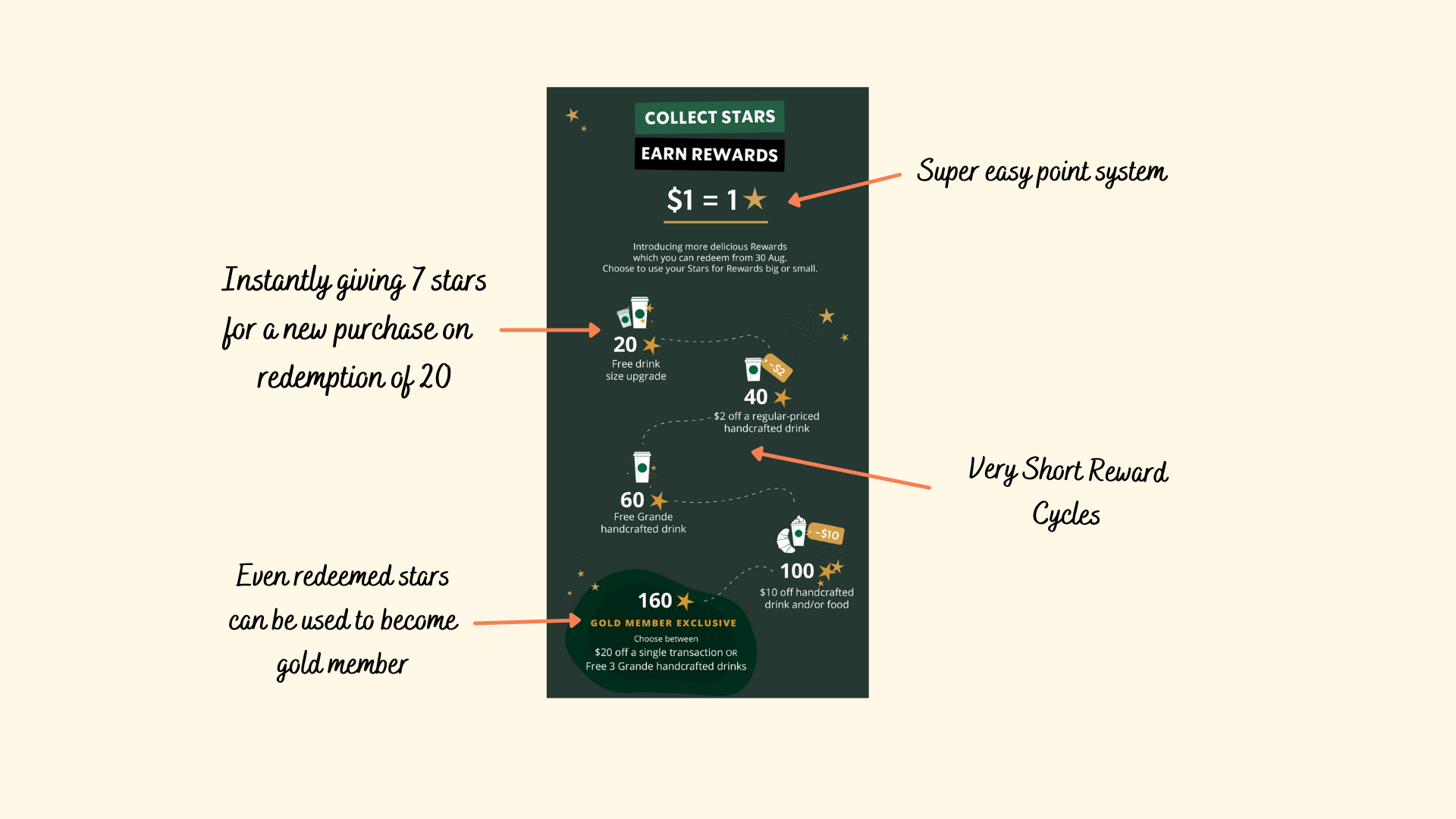
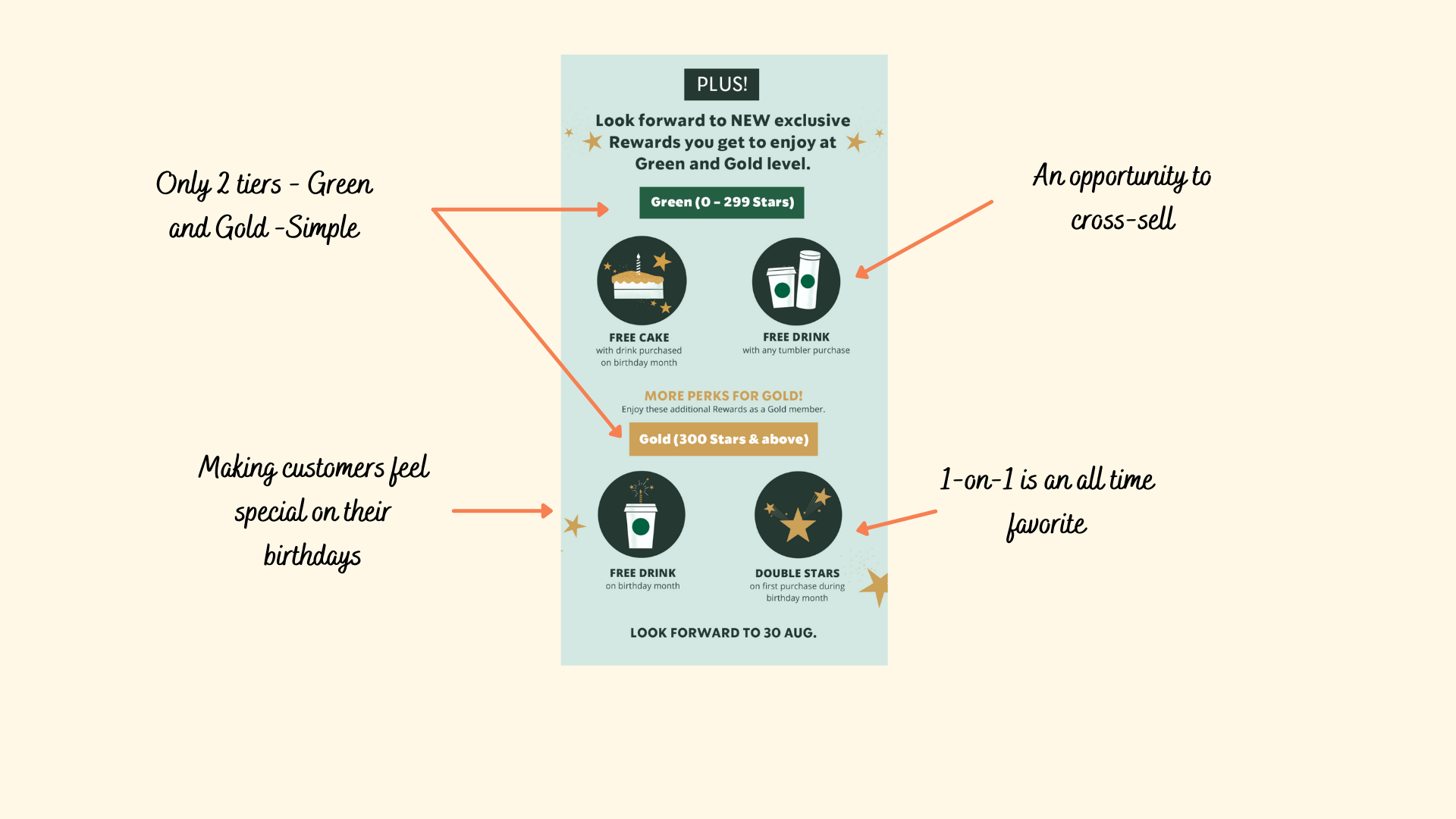
The reward point system for customers should be well structured, easy to understand, and membership-based. Well-structured programs make the best use of human psychology to drive success. Easy to understand systems increase customer engagement. Membership allows you to collect some information about the customers. Such information could help improve the relationship between you and them. For instance: Let’s take a look at the most recent reward point system by Starbucks.
Long-Term Oriented
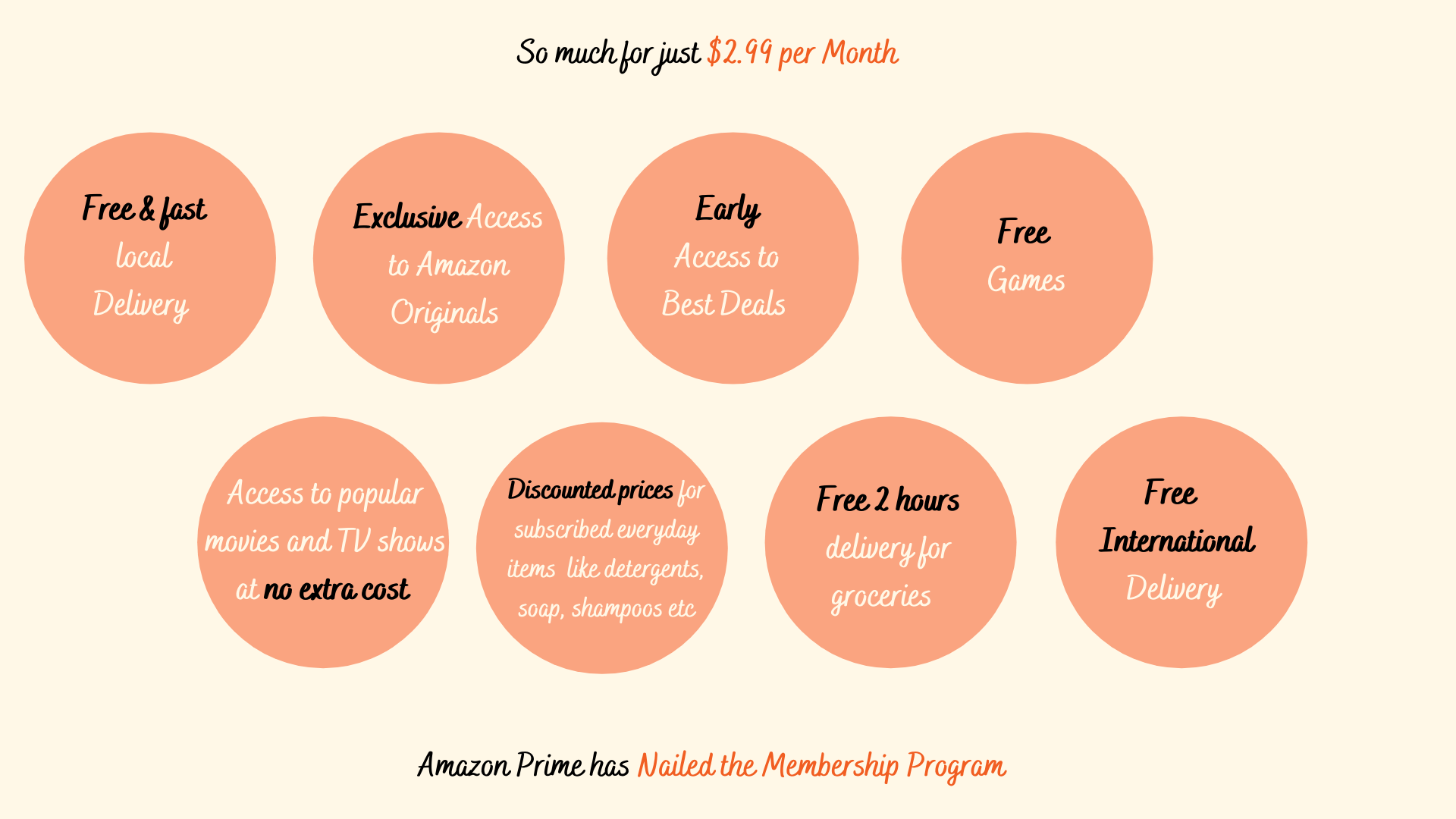
Consider reward point systems as a long-term strategy as they are expected to form a long-term investment for both the provider and the members. Amazon prime has nailed it with their ‘Prime’ program. As per Statistica - ‘In the United States, industry sources estimated a subscriber count of 147 million in 2021.’.
Foster Loyalty
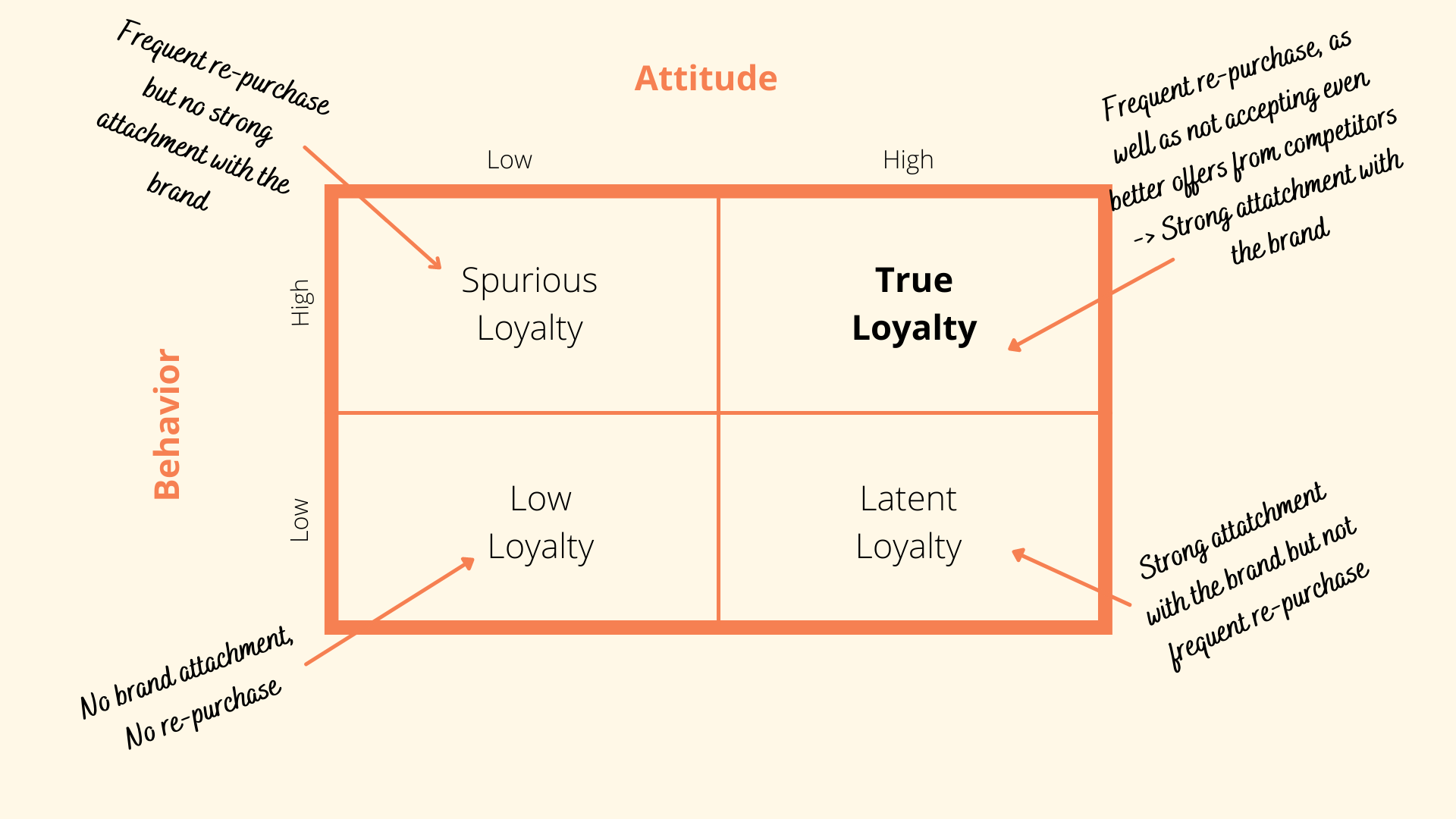
The loyalty programs should stimulate customer retention and customer share development and foster attitudinal and behavioral loyalty.
Attitudinal Loyalty
Attitudinal loyalty may be measured via:
Word of mouth
Repurchase intention
Price tolerance
Resistance against better alternatives
Intention to advocate the product or service
Behavioral Loyalty
Behavior loyalty may be measured via:
purchase or visit frequency
time or amount spent at every visit
(re)purchase probability
purchase sequence
retention rate
switching behavior
Futuristic
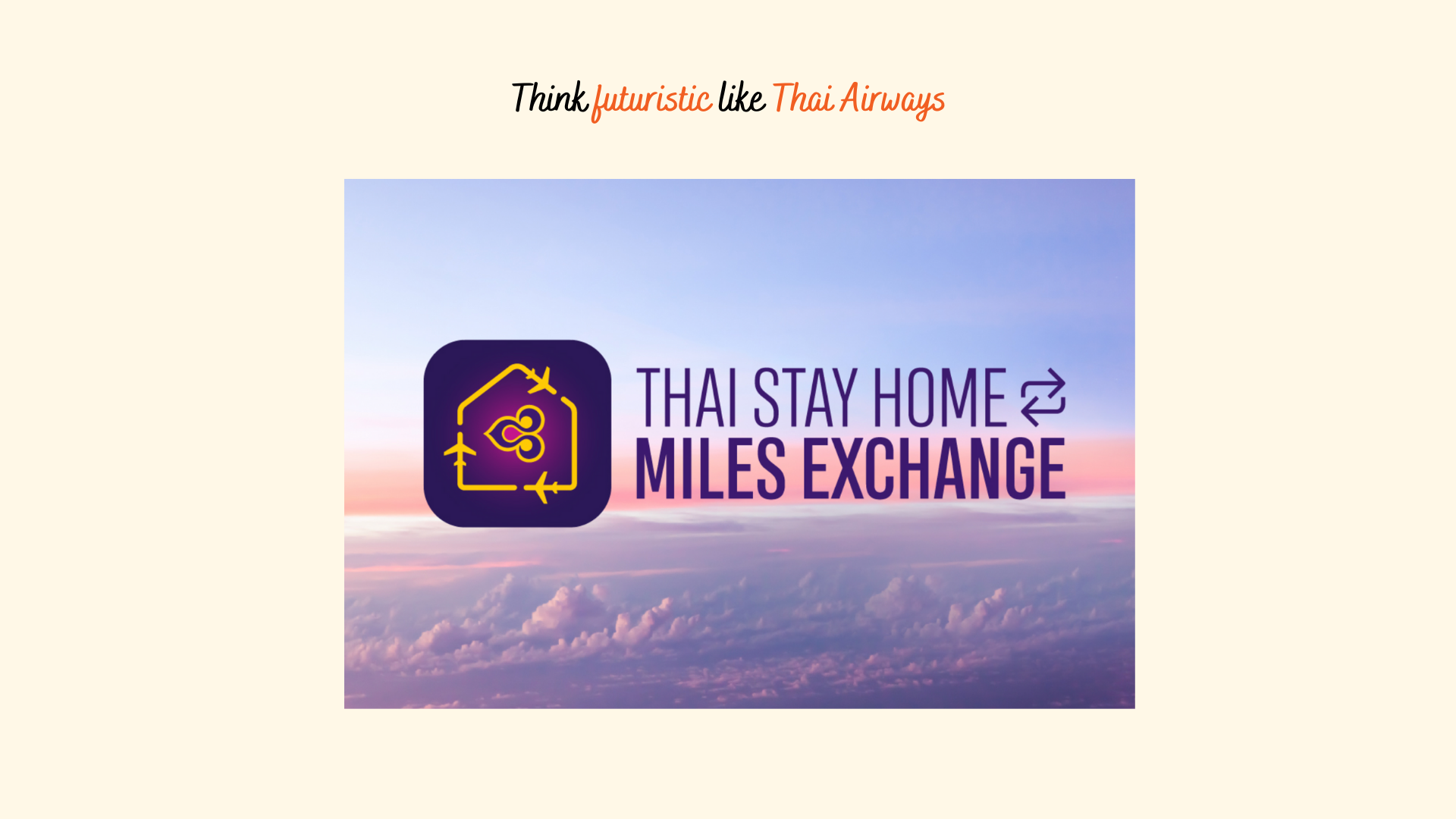
The loyalty programs should reward customers for their loyalty based upon their current or future value to your brand. Rewards may, for instance, consist of discounts, gifts, or preferential treatment. For instance: Thai Airways recently did something brilliant. Airlines usually reward their frequent flyers with miles. Thai Airways did quite the opposite. It rewarded their ‘Royal Orchid Club’ members with 1 million miles for staying at home. #EarnMilesStayHome
Air travel is one of the worst-hit sectors from the Covid-19 pandemic. But pandemic is not going to stay forever. Hopefully, air travel shall resume in full bloom after the majority population gets vaccinated. So, with a futuristic approach, Thai Airways actually hit two birds with one stone:
They showed care for their loyal customers by encouraging them to stay home.
When air travel resumes, the first airline that would come to members’ minds would be Thai Airways. With this, Thai Airways secured its future business.
Amazing! Isn’t it?
Why do Most Reward Systems Fail?
Besides knowing what to do, you must also check out what not to do. Majorly, the following five reasons lead to the failure of reward point systems:
Rewards do not feel worth it | Equity Theory
Complex reward point system structure
Non-dynamic nature reward point system
Not promoting the rewards program
Friction in customer participation
Rewards Do Not Feel Worth It | Equity Theory
Do customers feel fair or cheated about the rewards presented for money, time, and effort they spent?
If the answer to this question is yes, it’s a recipe for failure.
The equity theory states that people should receive benefits or rewards proportional to the relative efforts or inputs they provide. Therefore, perception of equity or inequity directly leads to fairness judgments, significantly impacting the buyer-seller relationship. Perceived unfairness has a strong negative effect on the success of the program.
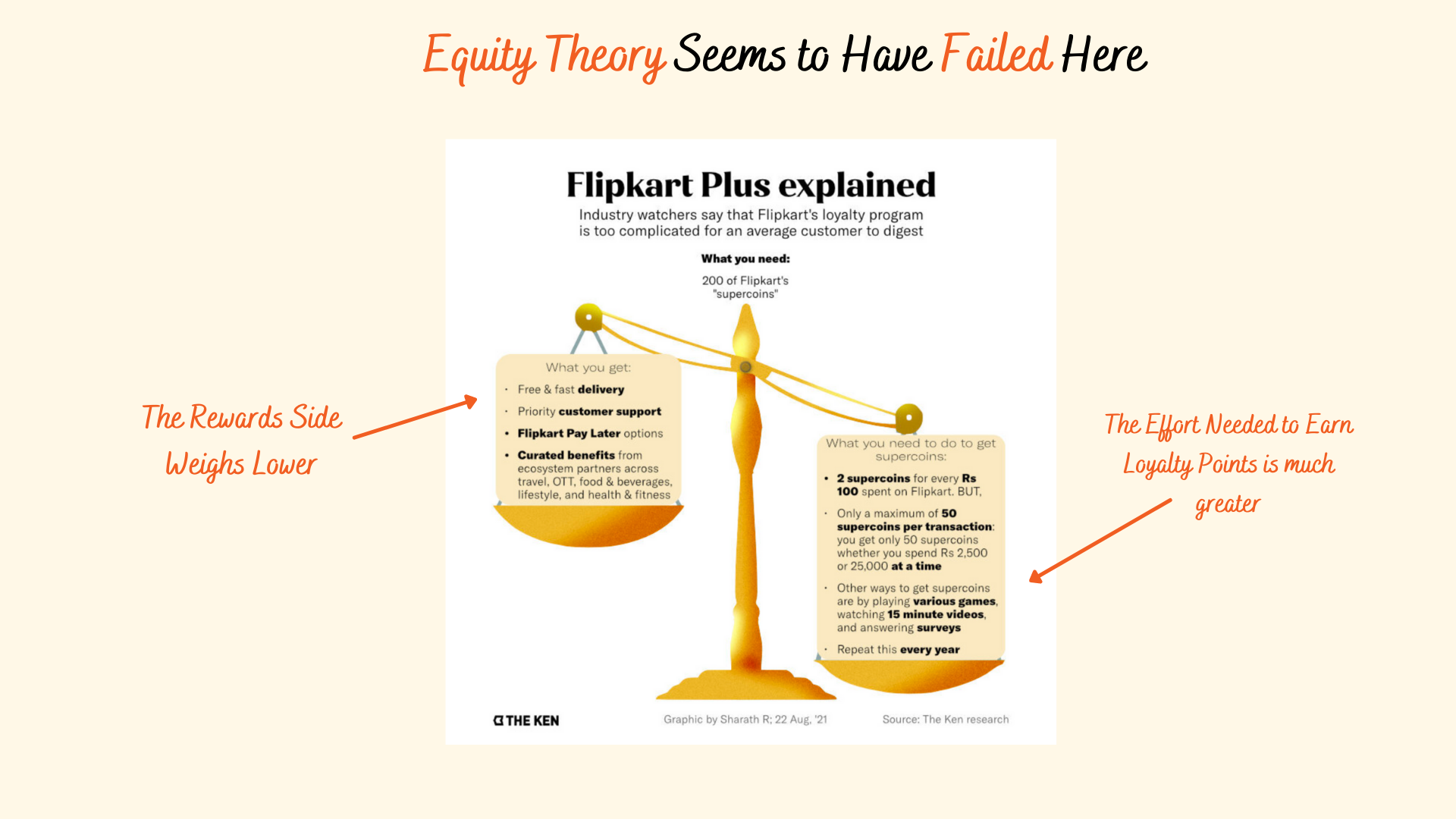
The Many Minuses of Flipkart Plus
Critiques say: “The convoluted structure and disparate incentives of Flipkart Plus may result in the failure of its primary task - fostering loyalty.”
Convoluted Structure | Asking Users Too much to Earn Points
Only a maximum of 50 supercoins per transaction, whether you spend Rs 2500 or Rs 25000. How unfair is it to the high-paying customer? Moreover, many items on Flipkart, like laptops, mobile phones, etc., fall in the higher price range.
There are other ways also to earn supercoins like watching videos or playing games, even answering surveys. However, supercoins earned this way does not seem worth the time of consumers.
Not just this, the accumulated points expire at the end of the year. Customers find it unfair to their loyalty towards the platform.
Disparate Incentives | Not Giving What Customers Deserve
Flipkart promises fast delivery but does not have a mature ecosystem to do it. The inventory pincode mapping still happens over Google docs. If you promise a reward that you actually can’t deliver, it creates animosity instead of affinity.
In comparison to the effort needed for earning supercoins, the rewards do not seem fair.
Complex Reward Point System Structure
Pro Tip: “Keep the reward point structure super simple that even a 10-year-old can make sense of.”
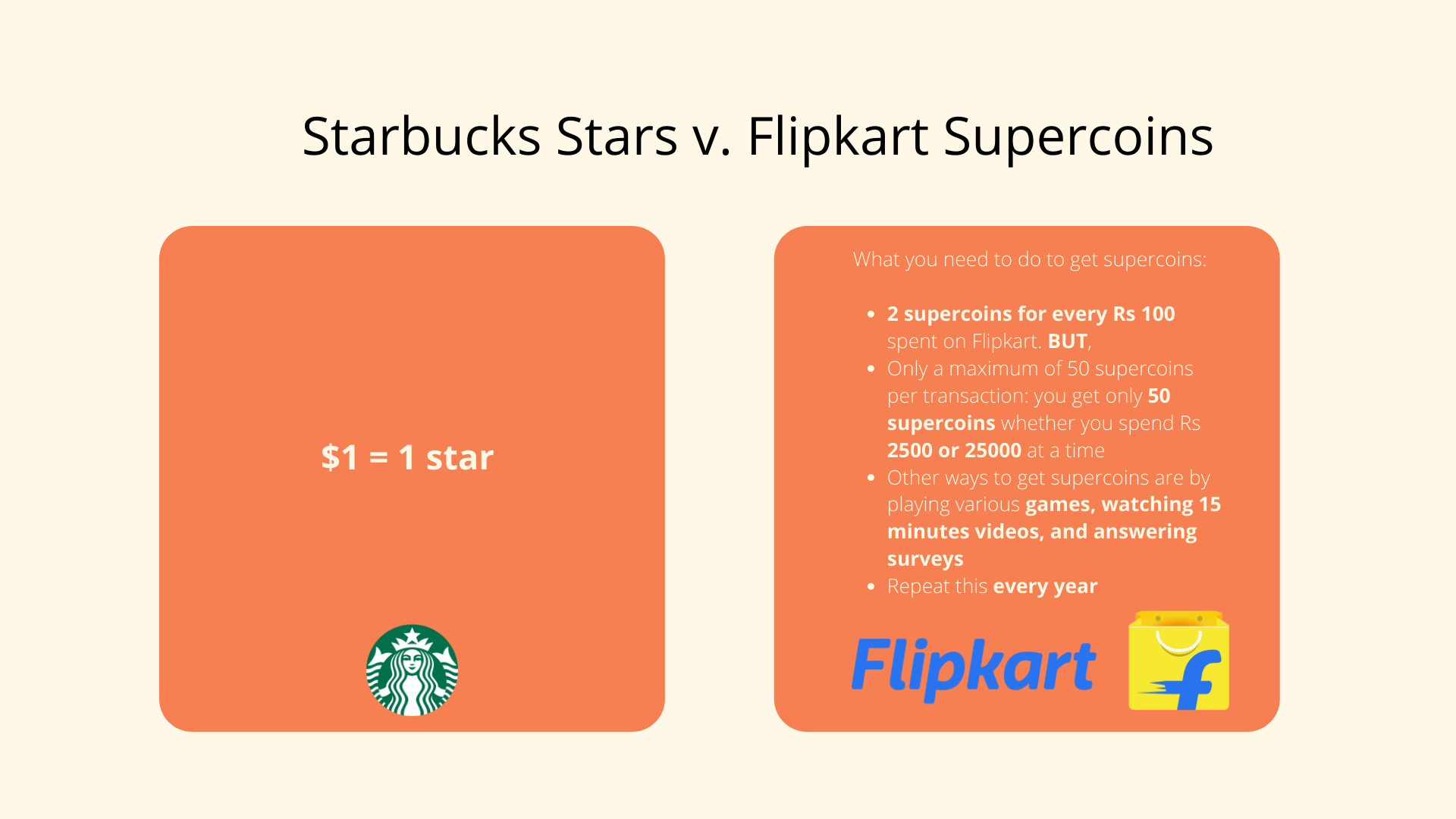
So we showed two reward point systems to a boy ten years of age - Starbucks and Flipkart Plus. We asked him which one he would choose out of the two. He said, “I like the Starbucks one better.” So we asked - “why?”. He said: It’s simple, I don’t have to spend too much money to get points. Also, I don’t want to fill any surveys to earn points.
Here are the two reward point structures mentioned above. Which one makes more sense to you?
Non-Dynamic Nature of Reward Point System
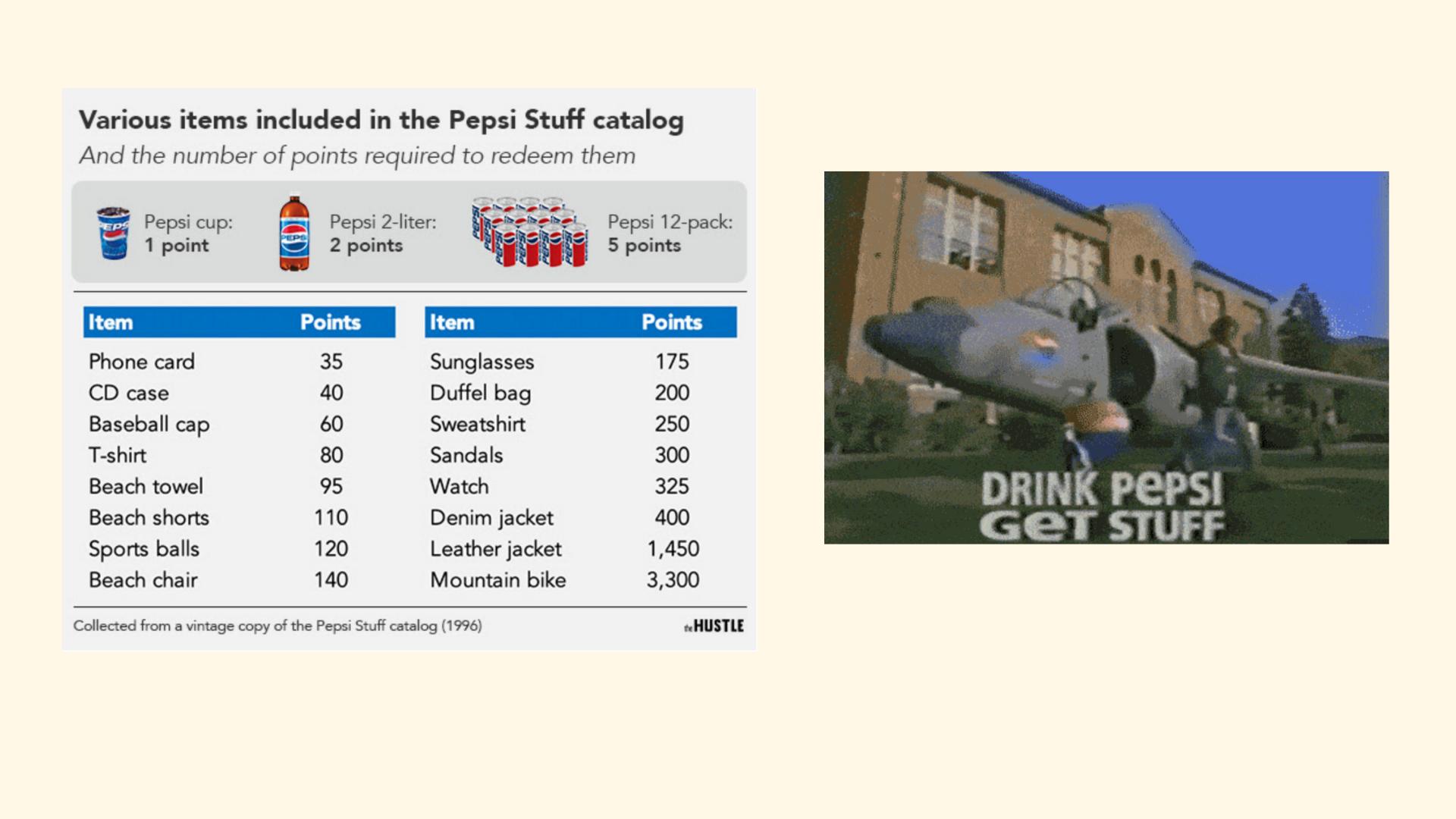
What worked for generation X might not work with millennials; what worked with millennials might not work with gen Z. You must keep revamping the reward point system as time passes. To understand this better, let’s take a look at one of the superhit reward point campaigns run by Pepsi in 1996:
Pepsi targeted the ‘Pepsi Stuff’ - a reward point system targeted at teenagers. Pepsi also promoted the program well with a TV commercial. The commercial showed a teen in cool clothes and accessories. And almost every item that teen flaunted was available for a certain number of reward points. The program was a huge hit, will a similar program work today?
No, why?
Today’s generation needs instant gratification they can’t for weeks and months for tiny rewards.
Redemption required extra effort of actually going to a post office and mailing the collected point tokens.
No one wants to look like a billboard. It’s no more cool to wear a t-shirt flashing a brand name unless it elevates a person’s status.
Not Promoting the Rewards Program
Program promotion requires as much effort as you put in crafting a strategic reward point system. The various channels can be:
Easy to spot place on the website
Emails with easy to understand infographics for the reward point system
SMS on completing every target accompanied with reward redemption details
Creative social media campaigns
Ads on different social media channels etc.
Friction in Customer Participation
Customers may have certain objections to entering into a relationship with your brand like:
Consumers are overloaded with companies’ marketing efforts and suspicious of companies that wish to build relationships with them.
They feel used and manipulated as they think that companies do not reciprocate and only aspire to gather consumer information and increase sales.
Consumers need more than just discounts or complimentary products, for instance - exceptional customer support, preferential access to offers, etc.
The idea here is to proactively overcome any entry barriers with a thorough understanding of consumer behavior.
Step by Step Process for Creating a Reward Point System:
The main benefits of a loyalty program include increased customer loyalty, greater advocacy, higher repeat-purchase rates, lower price sensitivity, and stronger attitudes towards brands and retailers
Step 1: Chalk out a budget
Let’s do some Maths here. Let’s assume your customer retention cost is $100,000 for 100 customers i.e., $1000 per customer. The customer retention costs comprise sales, advertisements, promotions, customer support and care, discounts, gifts, etc. Take out 20% of this budget and redirect it towards the customer reward point system. If you spend $20000 on a reward point system and you retain 50 more customers. The customer retention cost comes down to $100000 for 150 customers = $666 per customer. Increased sales and profitability from 50 more retained customers is a further plus.
Experiment with it and see how well your customers are engaging with your program. Revisit and re-iterate the reward structure if required. Conduct customer surveys to understand customer expectations from a reward point system.
Step 2: Find a common denominator for points
Try to keep things simple like Starbucks ($1 spent awards customers with 1 star). The idea here is to remove cognitive load from your customers. If they are required to process too much information they would rather not engage in your rewards point program.
Step 3: Create a reward structure
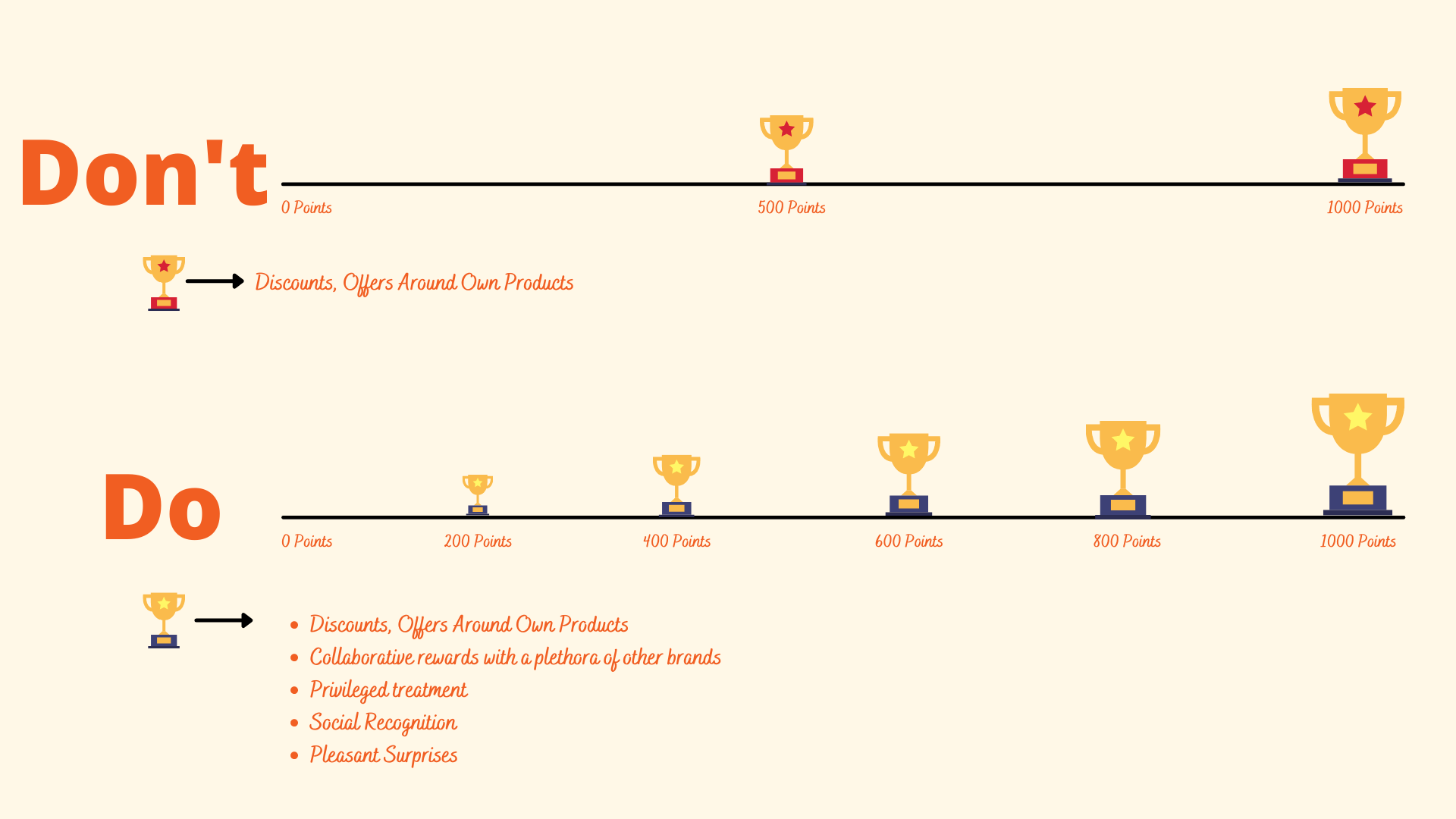
In rewards, when you just offer discounts or offers only around your products, it feels fishy to the customers. Customers think you just want a bigger share from their pockets than genuinely rewarding for their customers. The best bet here would be to enter into a collaboration with companies providing a humongous catalog of rewards for customers to make satisfactory choices.
There can be a variety of rewards; the only limit is your creativity and imagination.
Also, try to keep the milestones of the reward point system for customers closely placed. So that user feels it easy to achieve the milestones. And with every milestone, the reward should keep getting bigger (So that customers keep coming back for more). The rewards should be a mixed bunch of stuff that makes the customer feel valued. These three things are instrumental in bringing the customer back to your product/service.
While designing the reward point program, make sure to have a robust eco-system that helps you deliver what you are promising.
Step 4: Look for a software/API
Instead of going with the full-fledged reward point software, you can start small. For example, you can integrate a RaaS(Rewards as a Service) API with your sales system to reward your customers.
Step 5: Implement and promote
After learning the know-how of the software/API and implementing the reward point system, the next step is full-fledged promotion. If customers are not well aware of your reward point system, they can’t engage meaningfully with it. For example, give reward point system information a prime location on your website, integrate informational pop-ups if you have tech products, use advertisements, etc. Again, the program will be a failure if users are not well aware of it.
Step 6: Revisit and reiterate
Once you launch your reward point system, monitor the engagement of customers with it regularly. Invite them for surveys (tied with incentives) to understand their expectations from the reward point system. Then, based on the understanding of customer expectations, reiterate your reward point system.
Key Takeaways
Just as you need to learn the alphabet before learning spellings and forming sentences; similarly you need to understand the psychological and structural mechanics of a reward point system.
Psychological mechanics demand that the customers:
Feel elevated status
Develop a habit of availing your product or service
Feel a connect with your brand through value overlap
Structural mechanics demand that the reward point system should be:
Well structured
Long-term oriented
Fosters loyalty
Futuristic
Avoid the following to prevent reward point system from failing:
Rewards not worth the customers effort
Complex reward point system structure
Non-dynamic reward point system
Ill-promoted reward point system
Barrier in customer participation
Once you lay the strong foundation by learning these mechanics it’s time to create the program. Here is the summary of steps required:
Chalk out a small budget on experimental basis
Find a common denominator for awarding points
Create a super simple reward structure with a variety of rewards, not just offers and discounts on your products
Look for an API that you can integrate with you sales software
Promote your reward point system heavily
“Those who don’t change with time, life leaves them far behind.” With this we suggest that you keep revisiting the engagement from your customers with reward point systems.
Final Thoughts
“Just like love is the currency of exchange to deepen family relationships, rewards (accompanied with genuine care and value) is the currency of exchange to establish a strong relationship with your customers.”
 SCHEDULE A DEMO NOW






.png)